
A big question. Many people wiser than I have tried to define meditation in many words. They spoke of wisdom, of experience, of pure awareness. But if you ask the average person on the street "what do people meditate for?", the common answer is probably: "to relax."
I have to admit - that answer makes me uncomfortable.
It's not that it's wrong. Meditation does calm you, and countless scientific studies show its physiological and mental effects on stress. But saying the goal of meditation is to relax is like saying the goal of driving a car is to start the engine. It happens along the way; it's necessary - but it's clearly not the goal.
Calm is an important milestone. It's the quiet needed for something else, much larger, to happen. The real goal of meditation is to develop the ability to see things as they are.
To illustrate this - and move from an intellectual explanation to a felt experience - I'll use a visual metaphor from technology we all know.
The RGB allegory of consciousness
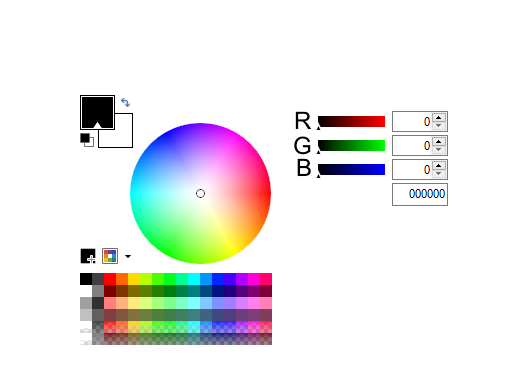
In the digital world, any color can be built from three primaries: Red, Green, and Blue - the RGB model. Let's use that model to represent human experience:
1. Green (G) = objective reality.
Suppose every event in reality has a certain "green value." For example, reality right now might be "green value" 140. If we had no filters, we would see a pure green on the screen (RGB 0, 140, 0). That is the state as it really is.

2. Blue (B) = cognitive interpretation (what we think).
3. Red (R) = emotional response (what we feel).
How do we "see" the world?
Our brain doesn't separate the colors. It mixes them automatically and instantly. The result is we never experience the "clean green" - reality as it is.
Take two people in the same reality with "green 140":
Person A: their thoughts add B=160 (strong blue), and feelings add R=120 (medium red). The mix (RGB 120, 140, 160) shows them a purple-brown on the screen. They experience, for example, an offensive, hurtful event.

Person B: reacts to the same "green 140" with thoughts adding B=80 and feelings adding R=200 (strong red). The mix (RGB 200, 140, 80) shows a brown-orange. They experience an annoying event - but less hurtful.

Both people saw completely different colors - even though the original "green" was the same. That shows how subjective the reality we live in is - produced inside our heads.
Meditation: resetting the values toward zero
This is where meditation comes in. Meditation practice - like the one in Nowvigation - trains quiet. As we practice, we slowly create neutrality. We learn to separate the "green" (reality) from the "blue" and "red" (our reactions).
As we progress, we can lower R and B. As red and blue move closer to zero, we see reality in "colors" closer to how it really is.
Meditation doesn't change the world (the green stays green); it changes the screen we watch it on.
This is exactly the difference between meditation and mindfulness. (Further reading: the difference between meditation and mindfulness)
(Further reading: breaking the habit of being yourself)
The small pause that changes everything
It's important to clarify: even after years of practice, most of us won't live in a constant state of R=0, B=0 every moment. We still react, feel, and think.
But the key message is that meditation lets us create a small moment of pause. Before we react, before we speak or act automatically, a small reminder arrives. A moment of doubt that lets us say: "I see brown-orange now, I feel anger - but maybe reality right now is simply… green."
That small pause is freedom. It lets us not be slaves to our automatic colors - our life experience. Those who get there - even briefly - report a profound sense of connection to the world, even love, because there is no longer a screen separating them from reality. And that is definitely not just relaxation.